Showing posts with label WSR. Show all posts

Friday, 22 July 2011

WsrInfoLive gets the thumbs down from WSR

A proposal to trial a live information system at a special event has been rejected by the WSR.

The system
WsrInfoLive enables trusted contributors to send messages about late running trains or loco swops. The messages or tweets are then broadcast to websites via RSS feeds, to mobile phones as text, and by email, and can be read by anyone with access to the web and/or mobile phone.

It was proposed the Special Events Planning Team allow the event controller to join the ranks of the trusted contributors and broadcast train running information, including of course, railway staff along the line and on trains, but the Team declined the proposal, preferring to remain with the method of communication which they recognise, and admit, is not effective.

The decision is disappointing in the extreme as the prospect of an effective method of informing railway staff at no cost might be considered by many as very appealing. We can only hope SEPT reconsider at some stage.

Meanwhile useful and instant information about train running during special events will remain contained within the event control office and a very few select folks beyond.

Sunday, 5 June 2011

It's "diesel gala" really...

Next weekend is the WSR's so-called "Mixed Traction" event, dominated by diesel haulage and diesel enthusiasts.

The general public need to be warned against travelling on anything but the lone steam train.

The WSR need to be more honest and call it a "Diesel Gala" - and if you don't believe me here is the link to the official WSR website page for this event so you can have a look at the pictures and words.

The only mention of steam on that page is "Saturday & Sunday one steam round trip each day"

And also move the event to the Spring or Autumn when steam trains don't usually run.

Pity the poor steam train seeking family who board the first few coaches of a diesel-headed train during this event...

Monday, 23 May 2011

Solar farm going ahead...

I have written before about the solar array (or whatever it is called) that was proposed for the field to the west of Whiskey Trail Crossing (aka Sandy Lane Crossing).

I hear it is going ahead and the field is pegged out. Construction should be well underway through the summer months.

According to Mike Rigby's Blog http://mikerigby.org/2011/05/18/sandhill-solar-park-work-begins/ the 1.8m perimeter security fence will be placed behind a screen of greenery.

I still prefer a nice meadow behind a nice heritage post and wire fence.

It's a good job there's still going to be a lot of nice countryside either side of the West Somerset Railway between Bishops Lydeard and Minehead.

Sigh...


Monday, 9 May 2011

Gates

The gates at Govier's Lane Crossing have been mentioned before on this blog. In March this year we had the opportunity to try the gates for ourselves. Thus it was that Matt in his wheelchair, pushed by me, made our way up the steep ramp from Harbour Road towards the first gate.

I opened the gate towards me without any difficulty, made a gap and pushed Matt through. But I didn't expect the gate, a heavy one, to close on me quite as quickly as it did. I'd normally leave a foot or my rear end to catch the gate and thus manage the collision with me. This time the gate caught me out and caught my calf. A mere bump for me. But for someone with ailing legs it could have hurt.

We found plenty of room to stop and check each way before crossing the track and likewise plenty of room to stop, well clear of the track, to size up how to negotiate the far gate. This one opened away from us and proved tame. Once through, we did rather wonder what the fuss is all about.

The gates can be opened; there is plenty of "refuge room" before and after crossing the track; and the trains are required to slow to 10mph well before the crossing so if there was an obstruction on the crossing the train could be brought to a stop safely.

In fact the crossing is rather better in many respects to many others around the country.

We understand the Railway has applied for permission to replace the current setup with a chicane shaped, gateless design.

Earlier in the day during our walk from Washford to Watchet along the Mineral Line path we did encounter a new gate that gave us concern.

The new gate stands across the much improved surface of the path at the east end of the Washford Playing Field. It is a "kissing gate". You know, you push the gate slightly, step into a refuge area, swing the gate behind you and step out the other side. If the gate is wide enough and the refuge large enough, a wheelchair can get through. Not easy but possible. But this one has a very limited refuge space. We got round it on the day because the fence on one side had not been completed so a slight diversion over some rough ground and we were away...

I have, eventually, contacted the Mineral Line Project people who tell me the gate can be opened right back, revealing a wide gap right through with no need to use the refuge. We may not have looked carefully but it did not seem to work like that at the time. I have asked a few chums to go and check it for me.

If the MLP folks are right, it then begs the question why have a gate at all? Exactly who or what is the gate meant to halt progress along this lovely walk?

Update: Now checked and the gate does open wide (towards Watchet). It rises to enable it to close by gravity and is not easy to hold back whilst the wheelchair is moved through. Indeed a lone wheelchair user going towards Watchet may find nigh impossible to both hold the gate AND wheel himself through. Going towards Washford the gate becomes a barrier. The wheelchair user must get right next to the gate in order to pull it towards him, assuming he can reach that far forward. Then, whilst holding the gate, somehow reverse, then hold the gate to the left before moving forward through the gap, with the gate closing rapidly behind (it's sure to crash into the wheelchair). I have asked for the gate to be removed as, since the gate can be opened wide, there seems no point whatsoever in the gate being there. [13 May 2011]


Wednesday, 13 April 2011

Strange things afoot

One or two disturbing events have rattled the normally workaday-confident air around the Railway. Sure, there are always comings and goings and there are always rumours and mutterings. However, something is bubbling away under the surface, a bit like a bulge of lava, and if/when it breaks through, which seems imminent, there could well be considerable changes. Changes that'll be either proposed and discussed or simply pushed through. I am not privvy to the detail but I have heard about "one railway" which sounds grand. But. What it means for the constituent bodies that make up the West Somerset Railway, I know not. The art and application of communication has rarely been more than scratchy around the WSR so I'm not expecting the rest of us will be told, consulted or otherwise involved. Which is a pity given the Railway can't exist without huge, positive, unrelently support from the masses. For those with long memories, I am happy to resume my "gang of four" role...

Saturday, 15 January 2011

More about Watchet crossings

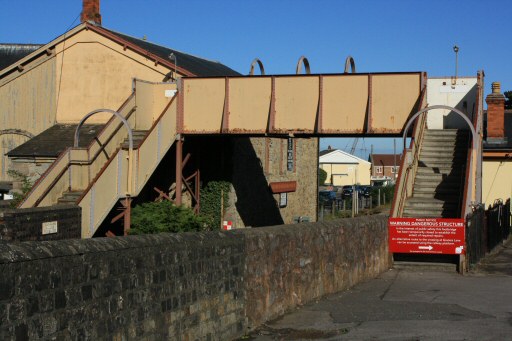
A report in the West Somerset Free Press suggests the owners of the footbridge at Watchet, the local district council, may have agreed to demolish the structure. It was the council who declared it unsafe and closed the bridge in 2009. The report goes on to suggest the council are to be asked to fund the demolition and the provision of a brand new footbridge. Well, that took a bit of time for that requirement to sink in, eh?

If the OK is given it seems the footbridge - dating from the 1880s will be taken down before trains start running again on 19 February but I guess there are later gaps in rail traffic for that work; and to procure from a specialist company in Wolverhampton a new footbridge made of modern materials but to a "heritage" style. Installation would have to wait until November when the trains stop running for a few weeks.


Meanwhile, just to the east, the issue of the gates at Govier's Lane Crossing continues to exercise minds. Late last year, a meeting was held at Watchet between local people and the Railway. Representatives from the Railway Inspectorate (who lay down guidelines and approve railway works such as Govier's Lane Crossing) also attended. Some of the discussions can be seen on Admiralscorner's channel on YouTube. The outcomes are yet to be announced but the gates have been officially chained open (to pedestrians) during the current "no trains" period. What happens from 19 February when trains restart for the 2011 season has yet to be seen.


In the other direction, the Railway have embarked on a major renovation exercise on the Mineral Line Bridge. This skew bridge spans the trackbed of the erstwhile West Somerset Mineral Railway, the trackbed now forming the popular Mineral Line Walk to Washford. As far as I can tell, the Mineral Line Bridge works have not generated local comment. Good.

Going back to the footbridge, it is said the new structure will look much like the existing one, Which is good as the heritage ambience of that part of Watchet will be unaffected. Or will the design require modification to allow wheelchairs, mobility scooters and pushchairs to cross, for the first time at this point, the Railway? There is sure to be an Equality Assessment. And will the Equality Assessment require ramps as well as steps? There seems to be room for ramps but at what detriment to the view on the road approach to the town from the south and to what extra cost to the council taxpayers?

The saga of the Watchet crossings seems likely to continue for some time yet...

Monday, 6 December 2010

So long CvdA

News reached me this morning of the passing on Sunday evening of Chris van den Arend. If the West Somerset Railway was one of a pair of gloves, then Chris was the other glove. Chris was a central player in the hard work which enabled the Railway to re-open in 1976 and later became Administrative Director in those early years. Latterly many will know Chris as Station Master at Williton and through his work with the Steam Trust, especially on the Sleeping Car. Chris also served as Chairman of the West Somerset Railway Association, for a time as the Railway's Operating Superintendent and was a long serving Signalman. Above all Chris was a really good friend to a great many people. The obvious memorials will be the Sleeping Car and the Williton Footbridge but many will know that Chris's legacy is, in fact, the entire Railway - and its community - which has prospered from his tireless, gentle, energy.

Friday, 5 November 2010

Crossing the Railway at Watchet

Not one but two. And both raising hackles with Watchet folk.

The Footbridge has now been closed for months due to being in need of repair. It is owned by the District Council who say they have enough money to demolish the Footbridge but no funds to repair and restore it so the Town Council was asked to find the money. The Town Council asked every household in Watchet to comment on raising the local tax to pay for the repairs. It seems most in Watchet preferred not to contribute. The matter continues. Meanwhile most people wishing to cross the Railway now tramp along the Platform at Watchet Station to the other crossing at Govier's Lane.

Now, the Govier's Lane Crossing, with the footpath traversing several tracks and sidings, has been a problem for Watchet folk since the Railway was opened in 1862 right through to the closure in 1971. With the reopening in 1976 the Crossing was
provided with small red/green lights indicating to pedestrians if a train was due on the sole remaining railway line. Small gates were also provided. Over the years the gates were "lost". Recently the West Somerset Railway upgraded the Crossing to national standards. The small lights were taken away, the approach fencing modified and the gates returned. It is the awkwardness of the gates that seems to be the main focus of complaint from users of the Crossing. Certainly it is not easy for wheelchair users to open the gates. And the gates tend to clatter when closing despite the Railway fixing dampers.

I guess if a bridge was built to modern standards at Govier's Lane Crossing then many of the problems would go away at that particular place. But of course a new modern bridge, complete with long sloping ramps, would cost a fortune and I'm sure a bid for funds would not be successful unless bundled with other nearby developments which themselves seem to have stalled.

As for the old Footbridge, its days may well be numbered. Upon its demise, there remains the little matter of getting to Govier's Lane Crossing. The use of the Platform may be the obvious route but as a thoroughfare it is hardly safe and much less so when packed with waiting passengers. And when a train stops it is complete chaos.

Much to ponder for some. Much to watch with interest from afar.

Monday, 1 November 2010

Stones again

Great news that the Railway will be used by up to 17 trains bringing a total of around 7000 tonnes of stone boulders from the Mendips to Minehead. The stone is for sea defence work at the Dunster end of the Golf Course.

Trains will run early morning, as required, to Minehead, where the loco will run round its train and haul it back to Drift Crossing where the stone will be unloaded and later taken across the fields to the worksite on the coast. The empties will then head back to Westbury leaving the WSR at lunchtime.

What a marvellous example of a railway doing what a railway should do. And well done the WSR for negotiating the deal.

So that's the fourth contract for stone traffic now. Plus the ongoing spent ballast trains calling at the Norton Triangle worksite.

It makes you wonder what other freight could be carried on the Railway. Do Tesco or Morrisons get their stores deliveries by train elsewhere; or what about the timber from the nearby forestry works?


Wednesday, 31 March 2010

Train travel and the new wheelchair policy

When holidaying in the area our family often use the West Somerset Railway as part of a day out.

This year, for the first time, we were subjected to the WSR's new wheelchair policy.

We had already contacted the Railway to allow them to assess the wheelchair used by our son, Matt. The length of the wheelchair, in its normal travelling position, exceeds the maximum dimensions allowed under the newly introduced policy. Despite being around 170mm too long, they granted a three year permit-to-travel to my son. The conditions of the permission require a named carer to accompany Matt. The carer is also responsible for moving the chair at all times when on the Railway. Other conditions require a phone call to the Railway to ensure Matt can be carried on the chosen day and train.

Anyway. One rainy morning, a train trip seemed a good way of getting out of the house so we decided Matt and his Mum would make a single journey from Dunster to Bishops Lydeard. We duly rang the Railway and during a very pleasant conversation we were advised to speak to the Dunster Station staff who would show us where the brake van would stop so help speed the loading of the wheelchair. The man on the phone did not quiz us about the size of the wheelchair or ask if we had a permit, and he cheerily concluded with "We look forward to seeing you"

The Dunster staff were very helpful, as were the train staff and before long the train had arrived, everyone safely boarded, and the train was on its way. On board, Matt and his Mum joined two other wheelchair users and their carers, all making for Bishops Lydeard. Whilst we knew what the fare would be, the ticket inspector was not quite so sure, maybe the new policy had confuse him.

Now the brake van had three wheelchairs and things were a bit tight. Not helped by the two large bikes propped against the carriage wall and taking up as much space as a wheelchair. Not only were the bikes not strapped to the coach and therefore able to topple and injure someone quite unable to move quickly out of the way, but it seems there is no policy on the size of bikes nor on the safe carriage of bikes. So non-essential bikes are welcome without question; essential wheelchairs are subject to all manner of question, approval, pre-planned arrangements, provision of attendant carer and so on.

We planned a second train trip. It was to be an afternoon trip for all three of us. However, as most people find on the morning of the day, the weather looked better in the morning with rain promised for the afternoon. So we revised our plans. Good job we had not made elaborate arrangements with the Railway Company. Again, we phoned the Railway. We want to take the wheelchair from Watchet to Washford on the 11.59am from Watchet. This time the Railway man was not so sure whether we could go or not. "It's a Gala day" he said but did not explain how a "Gala day" would affect our plans.

As an afterthought, he asked if the wheelchair was "big". In our opinion it is not a big chair so we said "no". That answer was seemingly accepted. We were not asked if we had a permit.

We parked near Washford Station and enjoyed the Mineral Line Walk to Watchet. At Watchet Station we asked at the booking office for our tickets to Washford. There was a little confusion about the fares for wheelchair users and carers. but with a little help from us it was resolved. We were advised the Railway had brought in a new wheelchair policy and the Station staff had a brief discussion about whether Matt's chair was oversize or not. We broke into the conversation and said it was but it had been assessed by the Railway and that a permit had been issued. The Station staff then went on to tell us the reasons for bringing in the new policy, although we did not understand why the reasons applied to Matt.

It's fair to say the Station staff were very friendly and helpful although perhaps a little embarassed when dealing with the new policy and trying to explain why it was introduced. We were shown where to wait for the train and heard more about heavy wheelchairs and crushed toes of Station staff.

The brake van was packed. With standing passengers. It was a busy train. There were a couple of seats, occupied by "normal" passengers, who stayed put. Matt was unable to get to a window and spent the mercifully short journey to Washford surrounded by standing passengers.

The train staff were excellent and helped as much as they could in the circumstances.

So, how did the new wheelchair policy affect our trips? On the positive side, despite having a wheelchair that falls foul of the policy, we were able to travel. On the negative, the requirement to phone seemed pointless because the situation on the trains was not known to the guy on the phone who was therefore not able to give quality advice about space in the brake van.

Lots of mixed messages. Lots of confusion. Lots of embarassment on both sides.

Finally. The notices on blue A4 paper posted at Minehead bluntly suggest wheelchairs exceeding the maximum dimensions will not be carried. Our trips prove the blue notice statement is incorrect. And had we simply arrived at the Station, like many do, and then read the notice, we could so easily have turned away, feeling unwelcome, and not spent money on tickets and in the shops and cafes. And not have enjoyed a trip on a steam train. We'd advise the Railway to revise the wording on those blue notices.

Tuesday, 16 February 2010

Wheelchair users could be denied travel on West Somerset Railway

The WSR has introduced new policy for disabled visitors. It contains useful advice about which station facilities are suitable or not. It seems the "disabled", if they can show they are indeed "disabled", can get half fare travel, and their carer likewise. I'm not quite sure who on the WSR staff determines whether a visitor is "disabled" and who is a "carer". Personally, I think it would be better for the Railway to charge full fare and use the extra revenue to invest in better facilities on the trains and stations for those who find the present arrangement wanting. To be fair, the WSR has and is investing in better facilities. A little more cash might speed that work.

Now, the new policy has a particular fault which visitors using wheelchairs and motorised scooters do need to pay attention to. The policy lays down maximum dimensions on the trains for wheelchairs and motorised scooters - 1200mm long, 700mm wide, 1350mm high, 1200mm from floor to lap, 150mm from floor to top of shoe. The WSR have adopted the dimensions from UK and EU regulations for accommodating wheelchairs in new-build trains and other railway facilities. The regs do not apply to heritage railways. Furthermore, my research finds the regulations were based on the results of a consultation exercise which measured lots of wheelchairs but which failed to deliberately include a good representation of all users especially long-term wheelchair-bound adults, many of which cannot use the "reference wheelchair" as now specified in the regulations. So, we have a UK and EU regulation based on a flawed consultation exercise and now adopted by a heritage railway who, despite having their attention drawn, seem to want to ignore the faults and the inappropriateness of the regulations to their business.

The WSR say those who use "oversize" wheelchairs can ask for an "assessment" which, if successful, may allow them to travel. I have no idea, and the WSR have declined to explain, what processes the "assessment" uses, who carries it out, where it is carried out and when. I suspect the WSR have not even thought about it, yet.

The result is many wheelchair-users, perhaps including some regular WSR visitors, will find themselves barred from travelling on this heritage railway.

I know one wheelchair-bound user who has used the WSR trains since 1977 with no problem, incident or complaint (from either side) and who now find his wheelchair exceeds the maximum dimension by a few centimetres and technically cannot be carried. And that despite no change to the Railway infrastructure, no change to the ramps used to get the wheelchair on and off the train, no change to the accommodation inside the train. Nothing has changed. Except the rules. To me, that sounds like discrimination and could be challenged in court if someone felt so inclined.

Many representations have been made to the Railway asking for a rethink but it is clear from their replies that they have no intention of changing the maximum dimensions.

Like many folk who have a wheelchair-bound member of the family I remain positive and optimistic that one day the WSR will see the light and modify the policy to enable almost all wheelchair users to travel on the best heritage railway in the land.


Wednesday, 13 January 2010

A Facebook Group

"I travelled on the West Somerset Railway in 2010" is a Facebook group for those who plan to travel on Britain's longest heritage railway in 2010. Hopefully a ticket will be purchased! It would be nice to see a large membership of the group on Facebook and even better if many members can make at least one trip this year and help the Railway reach a record 250000 passengers in 2010. I suppose the key to success is to ensure many Facebook users join up. I'm not sure how that is done effectively but I'm sure every effort will be made. There are ten stations - Bishops Lydeard, Crowcombe Heathfield, Stogumber, Williton, Doniford, Watchet, Washford, Blue Anchor, Dunster and Minehead. And lots to superb scenery along the twenty mile steam powered railway which runs from the Vale of Taunton Deane, through the gap between the Quantock Hills and the Brendon Hills, to the Bristol Channel coast at Watchet, Blue Anchor and Minehead, the gateway to Exmoor. See www.wsr.org.uk for more details.

Saturday, 9 January 2010

Snow but no supertrain to the rescue this time

A rare snowfall in West Somerset led briefly to a few transport problems. Of course it was nothing like the blizzard of 1978. Then, everything stopped. Except a few folks on the West Somerset Railway at Minehead who steamed "Vulcan" which then ploughed through chimney-high drifts all the way to Bishops Lydeard. Over the next few days, the little train was the only effective transport between West Somerset and the rest of the world. Mailbags, hospital patients and folks just trying to get home were carried in style through the snowy landscape. The Railway did a good job and got a very good press for its troubles. The recent snowfall cold have provided a perfect repeat but there appeared to be no desire this time. To be fair the roads were re-opened quickly and with the Railway's infrastructure more complex than it was in 1978 movement of any train, emergency or not, involves more people and more equipment - getting folks to their workplaces and getting the signals and points unfrozen would have been a major task. Nevertheless, it would have been nice to see No 88, two coaches (one a buffet) and No 9351 at the rear, chugging through the snow-covered West Somerset countryside, doing what steam trains do best.

Tuesday, 30 June 2009

Geocaching

Without giving the location away, I must report an recent interesting encounter with two enthusiastic "geocachers". Geocaching is an activity which involves one party placing a small box or container, the "cache", in a hidden spot and listing a series of clues and coordinates on a geocaching website. Other geocachers then set out to find the cache. When found, the finders often leave a small object in the container and take one away.

The two enthusiasts, armed with the details and a GPS, were certainly in the right area and homing in on their target, which happened to be a structure within the railway fences. They had crossed the fence and made their way along the tracks towards said structure. I happened to be there, with permission, for photography purposes. Since two trains were due - we could hear them - I felt I had better have a word or two.

We had a brief and constructive chat, I pointed out they should not be on the railway, they agreed, we had a very quick look for the cache, found nothing. I suggested the cache is probably accessible from the other side of the railway fence. They agreed and off they went back over the fence. I did ask them to contact the cache placer and ask for a warning word to be place on the website page.

As it happens, I contacted the placer, who responded very quickly and responsibly. And I would like to thank him for that swift action. I'd also like to thank him for advising folks to travel on the Railway when they go out looking for his caches.

Sunday, 8 February 2009

Rail grinding grinds on

The much awaited report on the so called "wheel/rail interface" problems that beset the West Somerset Railway in 2008 has finally been published. Two documents are being made available to working members and shareholders (not sure about WSRA members though). The bulky document is a report by David Holmes, a consultant engineer, brought in by WSR Plc Vice Chairman David Morgan to investigate the technical issues. The other is a summary by David Morgan, who headed the committee/group charged with looking into the whole episode.

The reports contain most of what folks expect, touching mostly on technical and management. And there are a few lessons learned, notably that works involving third parties should be subject to proper contractual procedures including proper inspection of work done. acceptance and closure, all of which were, incredibly, not done when the rails were treated.

I am not a lover of the phrase "lessons learned" which I hear so often these days - as if it is OK to make and write off mistakes in the pursuit of excellence. Not good enough for 99.9% of what we expect from competent folk.

It's not a "whitewash" but to me because it falls short of explaining exactly how it was allowed to happen. Because it needs to deal with the comptencies and ambitions of people central to the issues. Which is a management problem and not part of the remit.

Delegation was employed to the point of severance of any monitoring. Which, as any scholar of railway building in the 1800s will know, leads only to failure and wasted money.

Interestingly, the reports side-step the question of how much money has been lost.

There seems to be a ground swell of desire to put all this behind us. Fair enough. But only if we can be sure it will not happen again.

We shall see if lessons have, indeed, been learned.


Saturday, 3 January 2009

Further to Barry Doe's article in an earlier Rail magazine in which he criticised the WSR for failing to provide a daily service to and from Taunton, I note Barry has now responded publicly in his Rail column to the many people who complained. It would seem he has failed to acknowledge the simple facts of business (there must be a market and there must be the infrastructure and staff to make it profitable). He says he had a positive phone discussion with the WSR General Manager and was clearly pleased to learn the WSR have distant plans for a park-n-ride at Bishops Lydeard, by which distant visitors can change trains. Whilst the WSR GM is clearly better placed than I am to make comment about future WSR plans, I would suggest the obstacles I so carefully pointed out to Barry Doe would still remain, even if such as facility existed at Bishops Lydeard. Indeed, it would not even be a "park and ride". It would be more of a "ride-change-ride". Unless there is a main line company willing to run their trains, daily, every hour or so, to Bishops Lydeard, and the WSR can itself provide a regular, daily service, throughout most of the day and evening, and there is sufficient passenger traffic, then the whole idea will not provide the kind of service Barry Doe requires. I am impressed by how easily Barry Doe has accepted things, even to the extent of mention in his column. Like many long-time WSR supporters, I do not accept such ideas lightly, and although I would love to see a regular service to and from Taunton, it must only be done when all the pegs fit in the right holes. Sorry, Barry.

Friday, 12 December 2008

The turntable gets the nod

The "new" locomotive turntable at Minehead Station passed its inspection by the men from the Ministry - well, the Office of the Rail Regulator - yesterday. The freshly signed Certificate of Competence bestowed upon the massive lump of metal now permits full use. The West Somerset Railway have announced it will indeed be in use at the Winter Steam Festival on 28 and 29 December this year.

News of the turntable at Minehead has appeared in the website of a Swindon newspaper - see

http://www.swindonadvertiser.co.uk/community/remember/reports/3964409.Grandfathers_led_the_way_in_rail_history/ - who are, rightly, pleased to note that the Great Western Railway built these things to last.


This one was turning steam locomotives at Pwllheli in North Wales for nigh on seventy years before falling into disuse and eventually saved for preservation by some very, very far-sighted fellows in Somerset, who moved the whole thing to Minehead in 1977. And there is lay rusty away, uninstalled and unused, until very recently when opportunity knocked, money and land became available.


The turntable was too short for the longest steam locomotives now seeing main line use again, so the thing was extended at a specialist works in the Black Country, before making its way back to Minehead and placed on its original pivot already in place in a newly constructed pit next to Minehead Station.


Civic dignatories enjoyed a day out in October when the turntable was officially "launched", with several sightings of chain-of-office officials smiling as they pushed a real live steam locomotive round and round in circles just for the cameras, and the fun too, I guess.


Yesterday's low key inspection now gives Minehead and the West Somerset Railway the right facility to attract main line steam excursions right to the seaside town. The incoming steamer can be turned to face the right way for the homeward trip (main line officials don't like steam engines running "backwards"). This avoids the previous need for a diesel locomotive to tail the incoming excursion so that it can pull the return train, and avoids the incoming steamer making a lengthy, expensive non-revenue-generating trip to the nearest turning facility (Bristol, Westbury or Yeovil).


Great news for everyone, then, it seems. Thank goodness for those far-sighted folks back in the 1970s who knew a good thing or two about railways.

Friday, 25 July 2008

Track trouble

How much damage has been done to the Railway by the recent rail grinding machine? I'm not meaning the actual rails but the fact that it happened at all. No plausible explanation of just how the work was allowed to continue unchecked has been issued by the Railway so we can only sit here and spectulate. I don't think anyone wants a witch hunt, but I do think everyone wants to ensure nothing like this happens again.

And although our visitors have been wonderfully patience and forgiven, the Railway simply does not live up to the Heritage Railway of the Year. Such titles and awards, not long ago, were raining in on a regular basis. The diesel boys have been magnificent, turning out capable machines and crews at short notice, so at least the trains have been kept running. But the Railway attracts visitors because they expect the steam locomotives that the Railway shouts about on all its publicity and promotional material.

There have been times when I have been so ashamed of the debacle that I have considered closing www.wsr.org.uk because I too have been guilty of promoting a product that cannot be delivered. But I chose instead to keep posting what information I could get to allow folks to make their own minds up about trekking out to Lydeard or Watchet to buy their tickets and ride the Minehead Branch.

At the time of writing, the steamers are back and everything seems to be normal again. But there is bad feeling around and some folks will not allow this to be easily forgotten. And if faith is lost...

Sunday, 23 December 2007

Next stop Barnstaple...


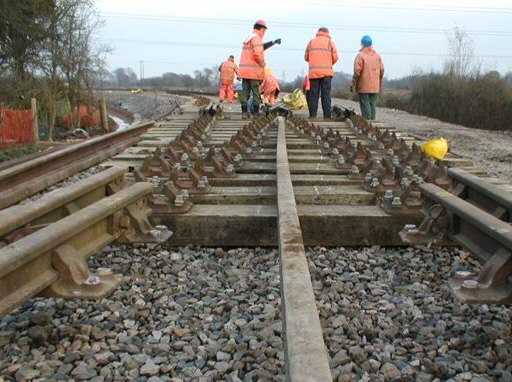
As the picture shows, the tracklaying along the West Chord of the new Triangle at the WSRA's Norton Fitzwarren site has now reached the former Barnstaple Branch formation. The alignment of the "Barney" is being re-used to form the South Chord of the Triangle, and also for two storage sidings. The works at Norton are proving to be an engineering showcase. Not only are the new embankments, culverts and waterways all behaving impeccably and dealing well anything the sky can chuck at them, but the site itself remains green, with grass fields making the whole scene pleasant to view and likely to be let out for grazing stock before too long. It could look like a bomb site but the WSRA are tidy people, for sure. The reaching of, and relaying of track on, the Barney line could be seen as an embryonic step towards a truly westwards extension of the West Somerset Railway - but the dismantled bridge at Allerford Lane conveniently severs the route at that point which seems terminal to me. Thanks for my good chum Malcolm Anderson for the picture.

Thursday, 8 November 2007

Turning the tables at Minehead

So at last - the turntable will be re-installed at Minehead. Thanks to some determined work by some WSR notables who have secured funds from several sources including European funds, and to many WSR supporters who have contributed to the Turntable Fund. Work began in early November clearing the site with a completion date of March 2008. Good news from the steam railtour operator, Steam Dreams, who seem keen to take early advantage of the "improved facilities at Minehead". Steam Dreams will send two tours down to Minehead in the summer, and thanks to the turntable, will turn the engines - Bittern and Duchess of Sutherland - to allow the return leg to be steam hauled too! I think this facility will bring much benefit to the Railway, to the town of Minehead and the district of West Somerset. Well done, WSR.